Rap Music Promotion, Step by Step
You will finish with a four-week release plan: what to post, when to pitch, who to contact and what to measure, using only free channels.
Guide·7 min read·With exercises
How rap music promotion works when you do it yourself
Rap music promotion for an independent artist comes down to repetition in a few places: short videos of the song before and after release, a steady release schedule, a pitch to playlist editors through your distributor, shows in your own city, and collaborations that trade audiences. No single post does the job.
Start four weeks before release day, not on it. The song needs a finished cover, a 15-second section chosen as the teaser, and one page that holds every link. Then you post the teaser in different forms, several times a week, until people recognise the hook.
Do not buy streams or followers. Stores and streaming services detect artificial plays, and the usual result is the song being removed and royalties withheld. Slow real listeners are worth more than fast fake ones. This applies to bought playlist placements that promise a fixed number of plays as well.
Get three assets ready first
Promotion with nothing to point at is noise. Before you announce a date, finish the things every post will reuse. Upload the song to your distributor at least three to four weeks ahead, because playlist pitching and pre-save links are only available before release.
- Cover art that reads at thumbnail size, saved as a large square file
- The teaser: the 10 to 15 seconds of the song people will remember, usually the hook
- A link hub: one page with the song, your profiles and a way to contact you
- A one-paragraph description of the song: what it is about and who it is for
Short video teasers: one clip, ten versions
Short-form video is where most new listeners will hear you first. You do not need ten ideas. You need one section of the song shown ten ways: performing it to camera, lyrics on screen, in the studio, in the car, a friend’s reaction, the cover reveal, a behind-the-beat clip.
Put the strongest line in the first two seconds and the song title in the caption. Post three to five times a week for the two weeks before release and the two weeks after. Write the list of ten versions tonight and film three of them in one session.
Reply to comments in the first hour, and turn real questions into the next clip. If one version clearly gets more saves or shares than the others, make three more like it before trying a new idea.
A release schedule you can keep
Consistency beats size. A single every four to six weeks gives you something to talk about all year and gives each song its own window. Dropping twelve songs at once gives you one week of attention.
Pick a weekday and stay with it. Count back from release day and put four dates in your calendar: upload and pitch, first teaser, pre-save push, release-week posts. Then set the date for the next single before this one is out.
- Week 4 before release: upload to your distributor, submit the playlist pitch
- Week 2: first teasers, cover reveal, link hub live
- Release week: daily posts, messages to people who asked for it
- Weeks 1 to 2 after: new clips, a live version, thank-you posts with real listener comments
Pitch playlists the legitimate way
Most distributors include a tool for submitting an unreleased song to streaming editors. It is free, and it is the only official route. Fill in every field: genre, mood, instruments, the story of the song in two or three plain sentences, and what you are doing to promote it.
Then look for independent curators and small blogs that cover your style and region. Read their submission rules, send one short message with one link, and do not chase more than once. Avoid any service that guarantees a number of plays. Make a list of ten curators and send three careful pitches this week.
Editors and curators hear a great many submissions, so make yours easy to place. Name two moods and one setting where the song fits, such as late drives or gym sessions, and say plainly which part of the song to skip to.
Shows, collaborations and your own city
Online numbers start offline more often than people admit. Open mics, college nights and support slots put the song in front of people who will post about it. Perform the new single second in your set, say its name twice, and have the link hub as a code on your phone.
A collaboration is promotion both ways. Choose artists at a similar level whose listeners would like you: trade a verse, share a show, or post each other’s releases. Message two artists in your city today with a specific idea and a deadline.
Keep a simple list of everyone who helps: the host who gave you a slot, the blogger who replied, the artist who shared your clip. Thank them by name when the song comes out. Local scenes are small, and people remember who was easy to work with.
Measure three numbers, weekly
Check your artist dashboard once a week, not hourly. Three numbers tell you whether the plan is working: saves compared with listeners, how many listeners return, and which source brought them. A song that few people hear but many save is worth pushing harder.
Write the three numbers in a note every Sunday. After four weeks, keep the two kinds of post that brought listeners and drop the rest.
Do not compare your numbers with artists who have been releasing for years. Compare this single with your last one.
Paid promotion services: what they are and what to avoid
Search for ways to promote rap music and most of what you find are services: playlist pitching companies, ad agencies, publicists, repost channels and blogs that charge for coverage. Some are legitimate. Many sell numbers that do nothing for you.
The test is simple. A legitimate service puts your song in front of real people who can choose to listen: an ad campaign you can see the targeting and spend for, a playlist curator who can say no, a writer who covers artists like you. A bad one promises a number of streams or followers for a price. Bought streams come from bots, and streaming services remove them, withhold the royalties and can take the song down.
- Ads on short-video apps: you control budget and audience; start small and measure saves and follows, not views
- Playlist pitching: fine when curators are named and can decline; never pay per guaranteed placement
- Publicists and blogs: useful once you have a story and several releases; expensive for a first single
- Repost and promo channels: check that their audience is real by reading the comments under recent posts
- Anything that guarantees streams or followers: skip it
Free tools worth setting up first
Before paying anyone, claim your artist profile on each streaming service so you can edit your bio and see who is listening, set up a single link for your bio that points to the song everywhere, and use the pitch form your distributor or the streaming service provides to submit the release to editors a few weeks ahead.
Then make the clips. A song with five short videos posted across a week will usually reach more people than the same song with a paid campaign and one post.
Three mistakes people make with rap music promotion
Starting on release day
By the time the song is live, the pitch window has closed and nobody knows the hook. The four weeks before release do more work than the four weeks after.
Posting the link and nothing else
A bare link asks strangers for three minutes with no reason given. Fifteen seconds of the song inside the post lets them decide, and the people who click already like it.
Paying for plays
Bought streams come from accounts that never return, which skews your numbers and puts the release at risk of removal. Money is safer spent on a better cover or a video shoot.
How to start promoting your rap music today
- 01
Pick the 15 seconds (5 minutes)
Play your next song and mark the section a stranger would repeat. If you are unsure between two hooks, draft alternatives in the rap hook generator and compare them aloud.
- 02
Write captions and the pitch (8 minutes)
Write the two-sentence story of the song for your distributor’s pitch form. Then use the rap caption generator for five caption drafts and edit them into your own words.
- 03
Put four dates in a calendar (5 minutes)
Choose a release day at least four weeks out. Add the upload and pitch date, first teaser date, release week and a review date two weeks after. Tell one person the date.
Rap music promotion examples you can copy and adapt
Four-week checklist
Week 4: upload, pitch, cover final Week 2: teaser 1 to 3, link hub live Week 0: release, daily clips, messages sent Week +2: review numbers, announce next date
Playlist pitch, two sentences
A 92 BPM boom bap single about working night shifts while your friends are out, with a sung hook and live bass. I am posting performance clips three times a week and playing it at two local shows this month.
Message to a curator
Hi, I make laid-back rap from the north side of my city. Your late-night playlist fits my new single, out on the 14th. One link below, no reply needed if it is not for you. Thanks for listening.
Ten teaser versions from one hook
To camera, one take Lyrics on screen Studio take with headphones In the car Cover reveal Friend hears it first Beat only, then vocal Live at an open mic Writing the line in a notebook Replying to a listener comment
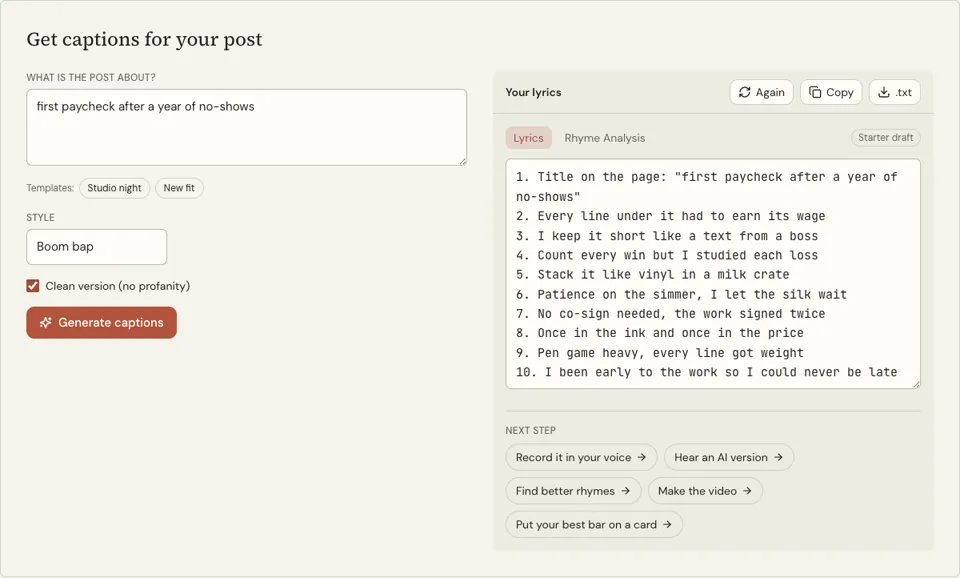
Try it: Rap Caption Generator
Rap music promotion FAQ
How do I promote my rap music with no money?
Use the free routes: short videos of your hook several times a week, your distributor’s playlist pitch form, local open mics, and collaborations with artists at your level. They cost time, not money, and they reach real listeners.
How often should I release music?
A single every four to six weeks suits most independent rappers. It keeps you visible, gives each song its own promotion window and teaches you faster than one large release a year.
How do I get my song on playlists?
Submit it to editors through your distributor’s pitching tool before release day, with every field filled in. Separately, contact independent curators who accept submissions. Nobody can honestly guarantee placement, so be wary of anyone who does.
Is paying for streams a good idea?
No. Artificial streams break the rules of streaming services. Releases found with them are commonly taken down and the royalties withheld, and your listener data becomes useless for planning.
Do I need a music video to promote a rap song?
Not a full one. Several short vertical clips usually do more for a new artist than one long video. If you want a visual for the whole song, a simple performance video or lyric video is enough.
What should be on my link page?
The newest release first, then links to your streaming profiles, video channel, upcoming shows and a contact address for bookings. Keep it to one screen on a phone and update it every release.
Related reading
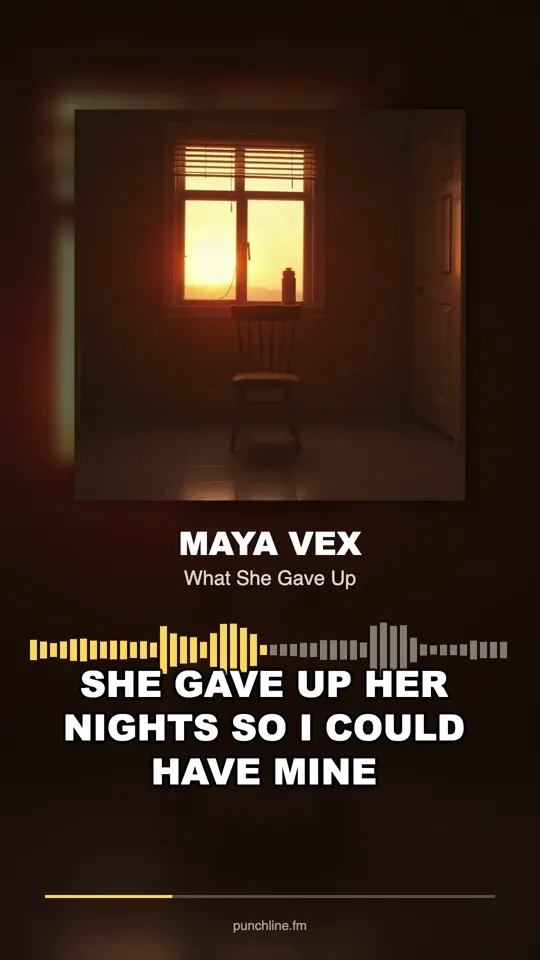
Related tools
Rap Caption Generator
Describe the photo or video you are posting and get ten original rap-style captions, each one line and under twelve words. It takes a few seconds and costs nothing.
Album Cover Generator
Describe what is on the cover, type the artist and title if you want them on the art, and pick a style. A square cover comes back in about 20 seconds for 1 credit.
Make a Mixtape
You will be able to plan a mixtape from a folder of songs: which tracks make the cut, what order they go in, what the beats require and how to package it.
Become a Rapper
This guide lays out the real sequence: skill, name, songs, releases, stages and audience, with a number attached to each step. No promises of fame or income, only work you control.
Last updated November 13, 2026